
/manifesto · 1,200 words · five chapters, one night
Compute has a time of day.
Why the price of every GPU-hour follows the sun, why half the planet's chips sit idle every night, and why the thing we sell is a receipt.
01 / 05 · 17:00 · The planet turns
Every price that runs on electricity turns with it.
Every twenty-four hours the planet turns once, and the price of everything that runs on electricity turns with it. At 5pm in Virginia the offices are lit, the air conditioners are running, and the grid is buying power at the top of its daily curve. At the same moment it is midnight in Cape Town and one in the morning in Helsinki, and the same megawatt-hour costs a third as much.
Data centres sit inside that curve. They pay for power by the hour, they price their GPUs by the hour, and both prices follow the sun. A GPU-hour in Northern Virginia at 3pm costs more than the identical GPU-hour in Oslo at 3am. Same chip, same model, same tokens out. The only difference is which side of the terminator the rack is standing on.
Most AI work ignores this. A job is submitted, it runs in whichever region the account was opened in, and it is billed at whatever that region charges that afternoon. For work a person is waiting on, that is the right trade. For everything else, it is money spent on an impatience nobody asked for.
Nobody decided this on purpose. Cloud regions were chosen years ago for latency to customers, for tax, for where the first engineer lived. Then training runs and batch jobs grew a thousand times larger and inherited the same address. The address became the price, and the price became a fact of life that nobody checked against a map of the night.

the spread between the dearest and cheapest megawatt-hour on the planet, most hours of most days
02 / 05 · 02:00 · The night side
Half the planet is dark, and its chips are idle.
Look at the planet at any minute and roughly half of it is dark. On the dark half the offices are empty, the grid is slack, and racks of GPUs bought for daytime demand are sitting partly idle. Providers sell those hours as interruptible capacity, at a discount, with a warning that they can take them back at short notice.
That warning is why most teams never touch them. An interruptible GPU is cheap until it disappears halfway through a job, and then it is expensive in a different way: a missed deadline, a rerun, a person paged at four in the morning to explain why the numbers are late.
But most of the work AI companies run is not waiting on a person. Evaluations, embeddings, synthetic data, backfills, classification over a billion records, a summary of every document in a warehouse. This work has a deadline measured in hours, not milliseconds. It can wait for the night side. It can move to wherever the night is.
That is the whole idea. Work that can wait an hour should run where it is cheapest, and something should move it there. We are that something.
of the GPUs we can reach sit unsold on the night side of the planet, every night
03 / 05 · 04:30 · The shortage
A shortage of afternoons, not of chips.
GPU rental rates rose 40% this year. Every lab is buying, every hyperscaler is building, and lead times on new capacity are counted in quarters. The shortage is real, but it is not evenly spread. It is a shortage of afternoon hours in a handful of expensive regions, where almost everyone happens to have opened their account.
At 3am in Iceland, Québec, Oslo and Iowa there are GPUs nobody is using. We route to twenty regions on six continents and 61,696 GPUs, and on any given night thousands of them are unsold. That is not a rounding error. On a single night it is more compute than most companies use in a month.
The market for that compute is broken in an ordinary way: the buyers can't see it, and the sellers can't trust it to stay sold. A buyer would need accounts with seven providers, a scheduler that knows tomorrow's prices, the discipline to checkpoint and resume, and someone awake in four time zones. A seller would need to know the job will finish before they need the chips back. So the hours go unsold, every night, everywhere.
We sit between the two. To the buyer we are one endpoint, one price and one deadline. To the seller we are a buyer who always finishes on time, who checkpoints so a reclaimed GPU costs minutes instead of a rerun, and who pays for the hour whether or not we needed all of it. Both sides get a trade that was impossible to make alone.
change in GPU rental rates over the last twelve months
04 / 05 · 06:12 · The receipt
Don't trust the router. Read the receipt.
We don't ask anyone to trust a routing algorithm. We ask them to read a receipt.
Every job we run ends with one. It says what ran, how many tokens, where, on which GPUs, when it was submitted, when it was due, when it landed in your bucket, what you paid, and what the same job would have cost at the three cheapest providers we could have sent it to instead. It says when we deleted our copy.
Each line is hashed on its own, and the hashes are hashed into a root printed under the barcode. Change one number and the receipt names the line that changed. You can check it in your browser without asking us anything. We publish every receipt, redacted to an animal name, so anyone can count our jobs and our misses.
A receipt is the unit of trust because it is the unit of work. Not a dashboard average, not a benchmark, not a case study. One job, one deadline, one price, one record.
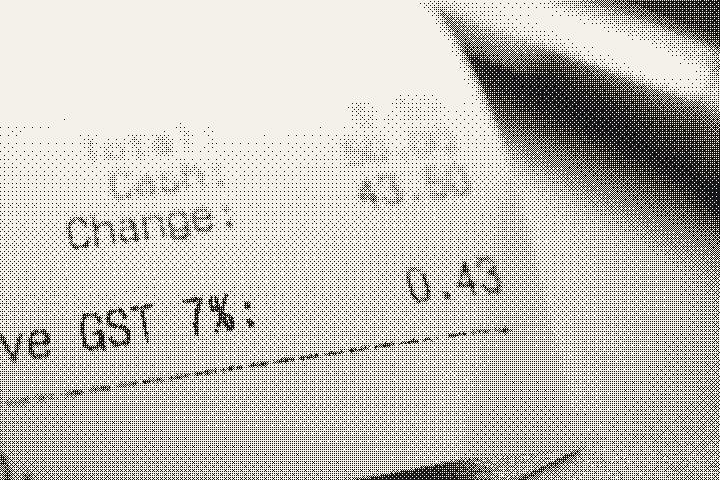
fields on every receipt, each with its own hash
05 / 05 · 08:00 · Certainty is the product
What people buy from us is certainty.
Cheap compute is easy to promise and hard to use. What people actually buy from us is certainty: a price before the job starts, a deadline that holds, a receipt when it ends, and a way out that takes one line.
So we price before we run. The proof quote on our home page uses the same rules that price every receipt. If we can't meet your deadline, we say so before you submit and offer the deadline we can meet. If we miss one anyway, the job is free and we credit you twice its cost, automatically. Since March we have missed three, in one incident, and the postmortem is public.
For the companies whose compute bill is now a line at every board meeting, we sell the most certain thing of all: a fixed price for twelve months, hedged before we quote it.
Certainty also means knowing where your data goes. Outputs land in your bucket and nowhere else. Inputs are deleted when the job finishes. Our staging copy of the outputs is gone within seventy-two hours, and the receipt says exactly when. If you want to leave, one command exports every receipt and invoice and returns your balance within five business days.
The planet will keep turning. Half of it will always be dark, and the dark half will always be cheaper. Our job is to make that boring: to put your work where the night is, finish it before you need it, and hand you a receipt that proves it. The price of compute, right now, is whatever the night side is charging. We'll take you there.

deadlines missed since March, all refunded with 2× credit
08:00 · the night side right now
The cheapest GPU-hour on earth is in Seoul, $2.09.